Arabic Letters and Numbers Tracing Workbook: A Practical Guide for Learning and Teaching
The Importance of Arabic Alphabet and Number Tracing
Learning to write the Arabic alphabet and numbers is a fundamental step in mastering the Arabic language. Whether you are a beginner or an educator, having access to an Arabic Letters and Numbers Tracing Workbook can significantly enhance your learning experience. These workbooks provide structured practice that helps learners develop muscle memory and proper writing techniques.
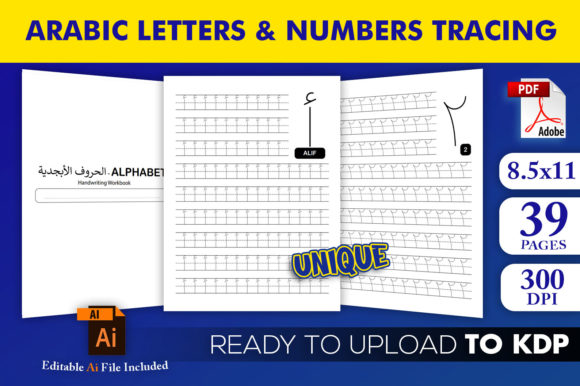
The Arabic Alphabet Numbers - الحروف الأبجدية و الأرقام tracing workbook is designed with simplicity and clarity in mind. It allows users to trace each letter and number multiple times, reinforcing correct form and stroke order. This method is especially beneficial for young learners or those new to the Arabic script.
What You Get in the Downloadable Workbook
When you download this comprehensive Arabic Letters and Numbers Tracing Workbook, you receive more than just printable pages. The package includes an editable source file in Adobe Illustrator (Ai), which means educators and designers can customize the content to suit their needs. This flexibility is a major advantage when creating personalized learning materials or adapting the workbook for different age groups.
The downloadable content also features a PDF interior ready for upload to KDP or print. The files have been tested on KDP, ensuring they meet the platform's requirements for quality and formatting. This makes it easy to publish your own version of the workbook as an e-book or physical product.
Inside the workbook, you will find 39 pages of high-resolution interior content. Each page is carefully designed to guide users through the process of tracing the Arabic alphabet and numbers. The font used throughout the interior was selected by Beast Designer for its readability and aesthetic appeal, making the learning process both effective and enjoyable.
Understanding the Structure of the Workbook
The workbook is structured to accommodate both beginners and advanced learners. It begins with the basic shapes and strokes required to form each letter and number. As you progress, the complexity increases, introducing variations and common combinations found in everyday Arabic writing.
Each section of the workbook focuses on specific letters or numbers, providing ample space for tracing. This repetition is crucial for developing fluency in writing. Additionally, the workbook includes examples of how these letters and numbers appear in real-life contexts, such as in words, sentences, and numerical expressions.
The trim size of the workbook is set at 8.5×11 inches, making it ideal for use with standard-sized paper. This format is compatible with most printing services and digital publishing platforms, ensuring that your workbook looks professional whether printed or viewed on screen.
How to Use the Workbook Effectively
To get the most out of your Arabic Letters and Numbers Tracing Workbook, it's important to follow a consistent practice routine. Begin by familiarizing yourself with the basic strokes and forms of each character. Use a pencil or pen to trace over the provided outlines, paying close attention to the direction and pressure applied.
As you become more comfortable with the individual characters, start combining them into words and phrases. This not only improves your handwriting but also enhances your understanding of how Arabic is written in context. Regular practice is key to building confidence and proficiency in the language.
For educators, the editable source file provides an opportunity to tailor the workbook to the needs of their students. You can add additional exercises, modify the difficulty level, or include cultural references that make the learning process more engaging.
Benefits of Using a Tracing Workbook
One of the main benefits of using a tracing workbook is that it promotes precision and consistency in writing. Unlike freehand writing, which can lead to irregularities, tracing ensures that each character is formed correctly from the start. This is particularly important for learners who may struggle with the unique curves and angles of the Arabic script.
Another advantage is the ability to track progress over time. As you complete each page, you can see improvements in your handwriting and overall confidence in writing Arabic. This visual feedback is a powerful motivator and helps maintain engagement with the learning process.
Additionally, the workbook serves as a valuable resource for parents and teachers who want to support their children's or students' language development. It offers a structured approach that complements classroom instruction or home-based learning.
Considerations When Choosing a Tracing Workbook
When selecting an Arabic Letters and Numbers Tracing Workbook, there are several factors to consider. First, ensure that the workbook uses the correct font and style of Arabic script. Different regions may use slightly different forms, so it's important to choose a workbook that aligns with your learning goals.
Second, look for workbooks that offer a variety of exercises and activities. A well-rounded workbook should include tracing, writing practice, and contextual examples to reinforce learning. The inclusion of both letters and numbers is also essential, as it provides a comprehensive foundation for reading and writing in Arabic.
Lastly, consider the quality of the downloadable files. High-resolution images and properly formatted PDFs are crucial for ensuring that the workbook is easy to read and print. The fact that this particular workbook has been tested on KDP adds an extra layer of assurance regarding its compatibility and quality.
Integrating the Workbook into Modern Learning Environments
In today's digital age, integrating traditional learning tools like tracing workbooks into modern educational environments is more important than ever. Many educators are turning to digital resources to supplement their teaching, and a downloadable workbook like this one offers a convenient and cost-effective solution.
With the editable source file, teachers can easily create customized versions of the workbook tailored to their curriculum or the specific needs of their students. This adaptability makes the workbook a versatile tool that can be used in classrooms, online courses, or homeschooling settings.
Moreover, the availability of a PDF version that is ready for KDP or print means that learners can access the workbook in a format that suits their preferences. Whether they prefer to study on a tablet or have a physical copy to practice with, the workbook is designed to be accessible and user-friendly.