Corporate ID Card Templates Design: Avoiding Common Pitfalls for Professional Branding
In the fast-paced world of corporate identity, a simple piece of plastic or cardstock often serves as the first handshake between your organization and the outside world. A Corporate Office ID Card is far more than just a security pass; it is a walking billboard for your agency's professionalism. When you choose the right Corporate ID Card Templates Design, you ensure that every employee looks polished, and every visitor feels secure. However, many businesses rush this process, selecting designs based solely on appearance while ignoring technical specifications that can ruin the final print quality.
The reality is that a beautiful design on a screen does not always translate to a crisp card in hand. This is where understanding the nuances of template customization becomes critical. Whether you are a small business owner launching your first startup or a marketing director overseeing a rebrand, knowing how to evaluate these assets can save you significant time, money, and frustration. Let's explore what makes a truly effective ID card design and, more importantly, what mistakes to avoid when customizing your own.
The Power of Customization in Corporate Identity
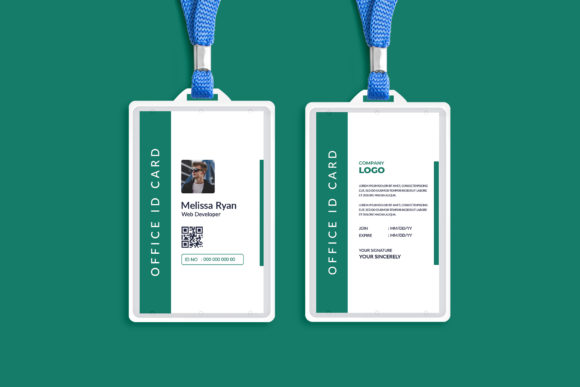
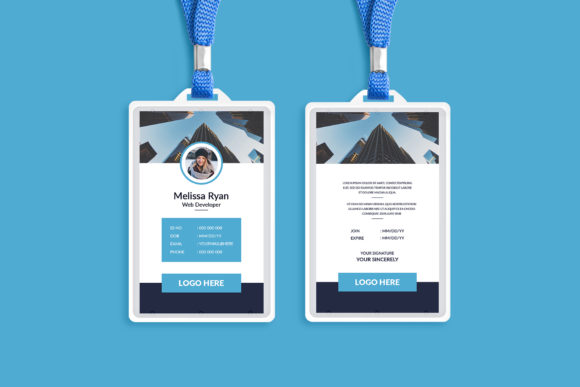
One of the most compelling reasons to invest in a high-quality Corporate ID Card Templates Design is the flexibility it offers. Unlike generic, off-the-shelf solutions, premium templates are built to be completely customizable. They allow you to suite your brand's colors and fonts perfectly, ensuring consistency across all your communication channels. Imagine a scenario where your company logo appears vibrant and sharp on the front, while the back side features a clean layout for barcodes or emergency contact details. This level of detail requires a tool that handles both sides effectively.
When you download a well-structured file, typically created in Adobe Photoshop, you gain access to organized layers. This means you can easily edit text, swap logos, change background colors, and replace placeholder images without breaking the layout. The best templates utilize popular, free-to-use fonts, ensuring that your text remains legible and professional. By using smart objects, even beginners can drag and drop their own graphics into the designated areas, achieving a result that looks like it was designed by a pro. This ease of use is vital for entrepreneurs who need to produce materials quickly without hiring expensive graphic designers for minor tweaks.
Common Mistakes That Ruin Print Quality
Despite the availability of user-friendly tools, many users make critical errors that degrade the final product. The most frequent oversight involves color modes. Screens display images in RGB (Red, Green, Blue), but printers require CMYK (Cyan, Magenta, Yellow, Key/Black). If you design a card using bright neon RGB colors and send them directly to a printer without converting to CMYK, the resulting colors will appear dull and muddy. Always verify that your Corporate ID Card Templates Design is set to CMYK Color mode before beginning your edits. This ensures that the vibrant hues you see on your monitor match the physical card.
Another common error relates to resolution. A low-resolution image might look acceptable on a laptop screen, but when printed at full size, pixels become visible, creating a blurry, unprofessional look. To avoid this, ensure your template is set to 300dpi (dots per inch). High resolution is non-negotiable for any item that represents your brand physically. If you attempt to upscale a low-res image within the template, the quality will suffer. Instead, start with high-quality source images provided by your designer or sourced from reputable stock libraries.
Users also frequently overlook the importance of bleed settings. Bleed refers to the area of the design that extends beyond the cut line of the card. If you design a background color or an image that goes edge-to-edge without including a bleed, you risk ending up with thin white lines around the edges of your cards after cutting. A proper template includes a 0.25" bleed area. You must extend your background elements to this edge to guarantee a clean finish. Ignoring this technical requirement can lead to rejected prints or the need to reprint hundreds of cards.
Evaluating Technical Specifications Before You Start
Before diving into the editing process, take a moment to check the specific dimensions and format of the file. Standard ID cards usually measure 2.13 x 3.39 inches. While this seems standard, some templates might vary slightly, leading to fitting issues if you are using pre-cut card holders or wallets. Ensure the file you select matches the physical constraints of your card readers or lanyards. Furthermore, confirm that the file is in the correct format, such as the Adobe Photoshop PSD Format File Included. Other formats like JPEG or PNG do not support layers, making future edits nearly impossible.
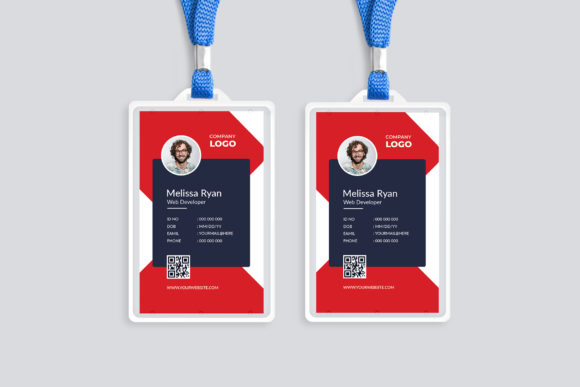
It is also crucial to understand what is included in the package. Many users assume that the photos used in the preview mockups are part of the downloadable file. In reality, Photos are not included in the purchase or download. The preview images are there only to demonstrate the potential of the design. Similarly, while the template may come with Google Fonts or free fonts, you must ensure you have those fonts installed on your computer before opening the file. If a font is missing, the software will substitute it with a default typeface, potentially ruining the intended typography hierarchy.
Better Approaches for Efficient Workflow
To maximize efficiency and minimize errors, adopt a systematic approach when working with your Corporate ID Card Templates Design. First, organize your assets. Gather all necessary logos, headshots, and text content before opening the Photoshop file. Since the template features Smart object layers, you can simply double-click the layer thumbnail to open the embedded image, paste your new content, save, and close. This method preserves the original formatting and effects automatically.
Always perform a proofread before sending the file to print. Check for spelling errors in names, titles, and contact information. It is easy to miss a typo when you are focused on colors and layouts. Additionally, export a test version of the file to view it at 100% zoom to check for pixelation or alignment issues. If possible, print a single sample card on regular paper first to check the size and layout against your actual card stock. This step catches issues that might otherwise go unnoticed until the entire batch is printed.
Remember that a Print Ready file is not just about looking good; it is about being technically prepared for the printing press. Features like Fully Editable, Layered structures allow you to adapt the design for different departments or roles without starting from scratch. For example, you might want to create a variation for management with a different border color or a distinct "Access Level" label. With a properly layered PSD, these changes take minutes rather than hours.
Making the Right Choice for Your Brand
Choosing the right template is an investment in your company's image. A poorly designed ID card can suggest a lack of attention to detail, while a well-crafted one reinforces trust and authority. By avoiding common pitfalls like incorrect color modes, insufficient resolution, and ignoring bleed margins, you ensure that your Corporate Office ID Card stands out for the right reasons. Take the time to review the features, understand the technical requirements, and utilize the Easy editable nature of the design to create something truly unique.
Whether you are a freelancer needing a personal badge or a large agency issuing thousands of passes, the principles remain the same. Focus on clarity, consistency, and technical accuracy. When you respect the technical constraints of print media and leverage the power of customizable templates, you create a professional asset that serves your team and your brand effectively. Don't let a bad design choice undermine your hard work; equip yourself with the right tools and knowledge to produce ID cards that reflect the excellence of your organization.